Région Sud Design Prize : Emma Faury–Graziani
Emma Faury–Graziani’s practice unfolds at the heart of a territory: in dialogue with the material that makes up its soil, the networks of artisans who work it, and the industries that produce there. A design graduate of the École supérieure d’art et de design de Saint-Étienne, she first rooted her work in the Auvergne-Rhône-Alpes region, focused on repurposing production scraps — waste, essentially — such as wood sawdust and cardboard. Like a new generation of designers questioning the future of a profession historically tied to an industry that still produces too much, Emma Faury–Graziani seeks to bring value back to what has lost it, through a place-based approach. The practice of design she presents at Art-o-rama embraces the material’s entire journey: from “waste” to research into its reuse and into biomaterials, from experimentation through to the development of a finished object.
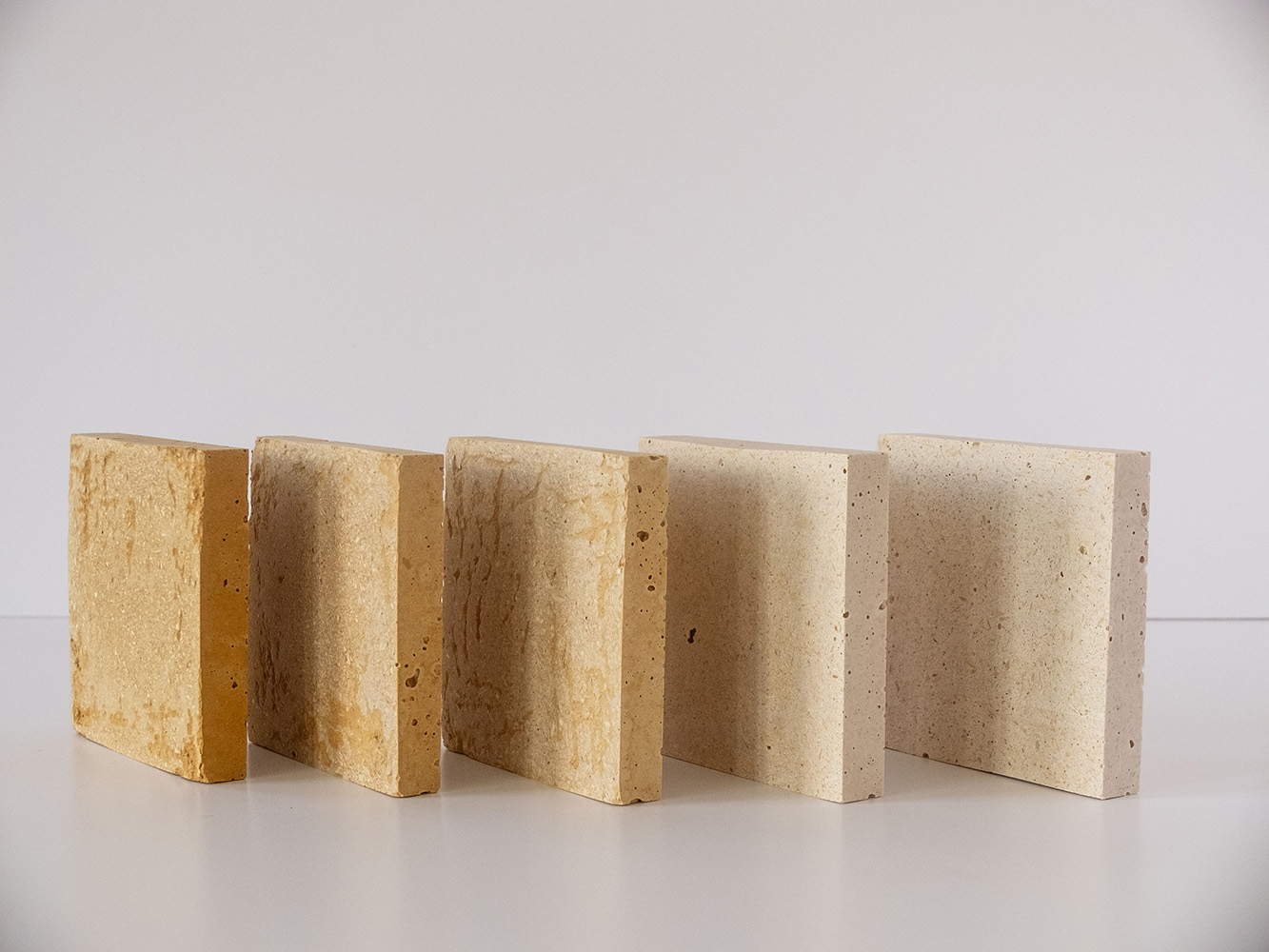
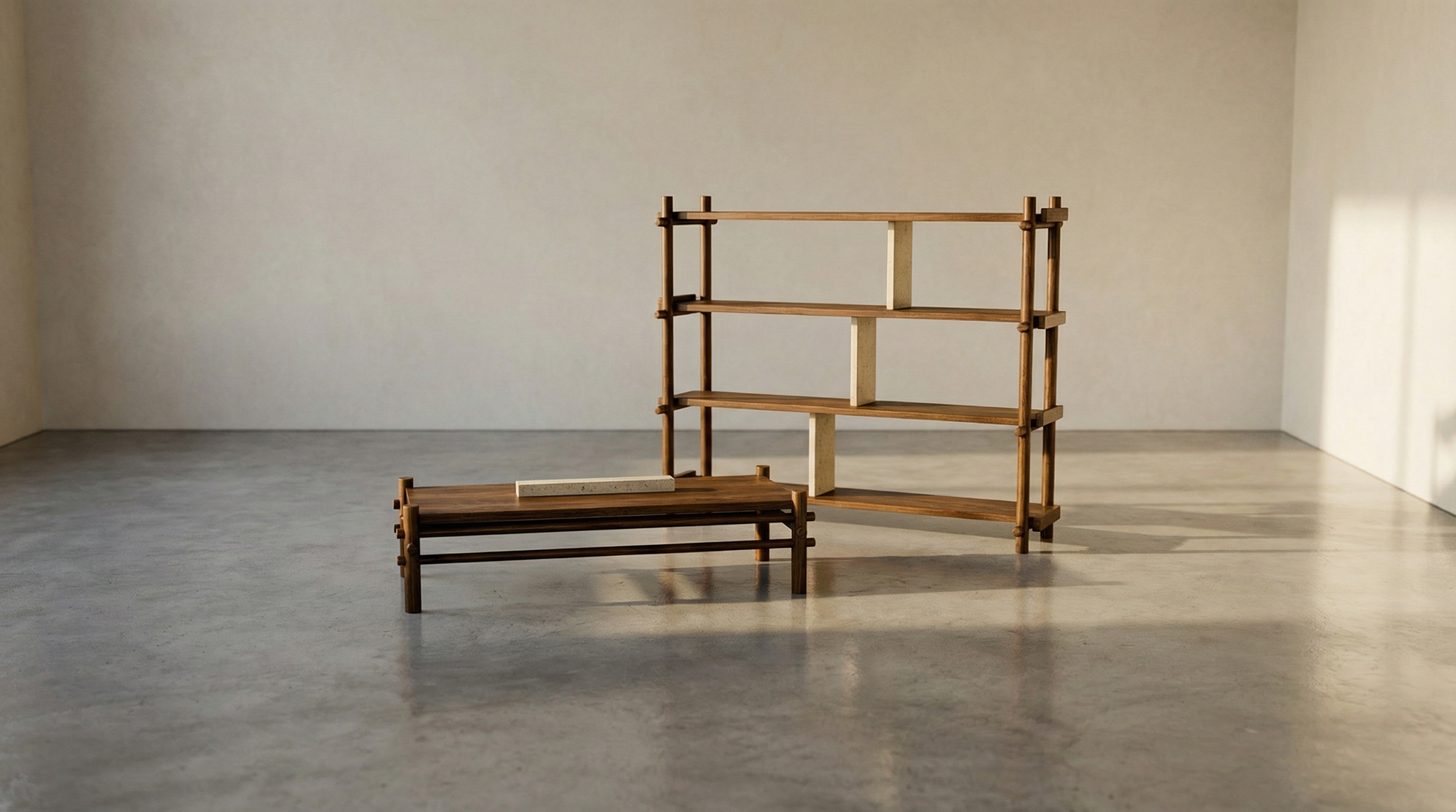
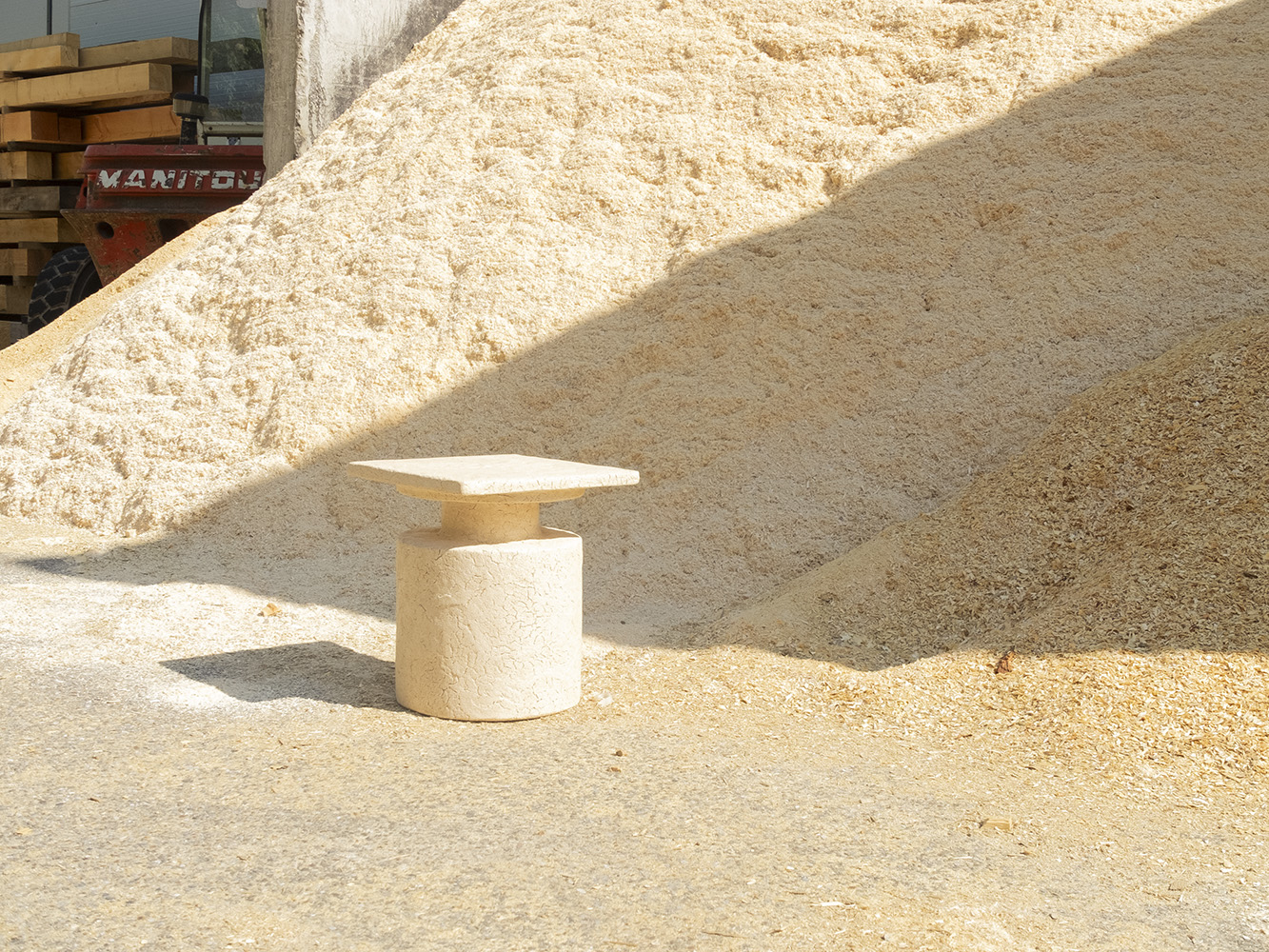
In Emma Faury–Graziani’s work, it is the material that determines the concept, not the other way around. Her research into biomaterials — that is, materials made up of organic, and therefore biodegradable, elements — illustrates this interplay well: the material’s transparency, its flexibility and texture, all of which must be read in light of its precariousness. The design process she employs is holistic, in the sense that a material’s physical, ecological, and aesthetic qualities cannot be considered separately from one another — and she engages with every stage of this creative process. The pedestal table she is exhibiting in Marseille, part of a complete, entirely dismountable line assembled without a single nail or screw — which already includes a bookshelf and a coffee table currently in development — draws heavily on the Japanese aesthetic concept of wabi-sabi, which might be loosely translated as the beauty of imperfection. The WSI Collection, developed in collaboration with cabinetmaker Paul Hoffmann, likewise stands out for reusing its own waste. The designer collects the wood sawdust generated during production and mixes it with jesmonite — an eco-friendly, non-toxic binder made of gypsum and an acrylic resin — so that no waste is left over at the end of the manufacturing process, creating an object that is “circular in the strictest sense, where the material it’s made of comes from its own making.” The designer is after both the permanence of a finely crafted object and the ecological “lightness” of an object that would dissolve once submerged in the sea — an object drawn from nature, then returned to nature without degrading it.
Having settled in Marseille only a few months ago, Emma Faury–Graziani is now redeploying her practice to embrace a new territory she originally comes from, questioning the next “waste materials” that will shape her upcoming research — from brickworks to seaweed, by way of soap factories. There is, in Emma Faury–Graziani’s objects, a graceful tension that mirrors the stakes of contemporary design at large: the search for an impossible balance between the future and the ephemeral.
by Justinien Tribillon
Emma Faury-Graziani is an object designer, a graduate of the École supérieure d’Art et de Design de Saint-Étienne. She founded her design and research studio in 2024, where she develops a practice centred on the experimentation of materials and manufacturing processes.
Her approach revolves around research into biomaterials, which she explores through an experimental and situated methodology. By collaborating with companies and craftspeople, she transforms off-cuts into biosourced materials, while seeking to perpetuate existing know-how and enter into dialogue with the productive realities of territories. She designs objects and materials conceived as vehicles for narratives and imaginaries, questioning the relationships between resources, uses, and territory.
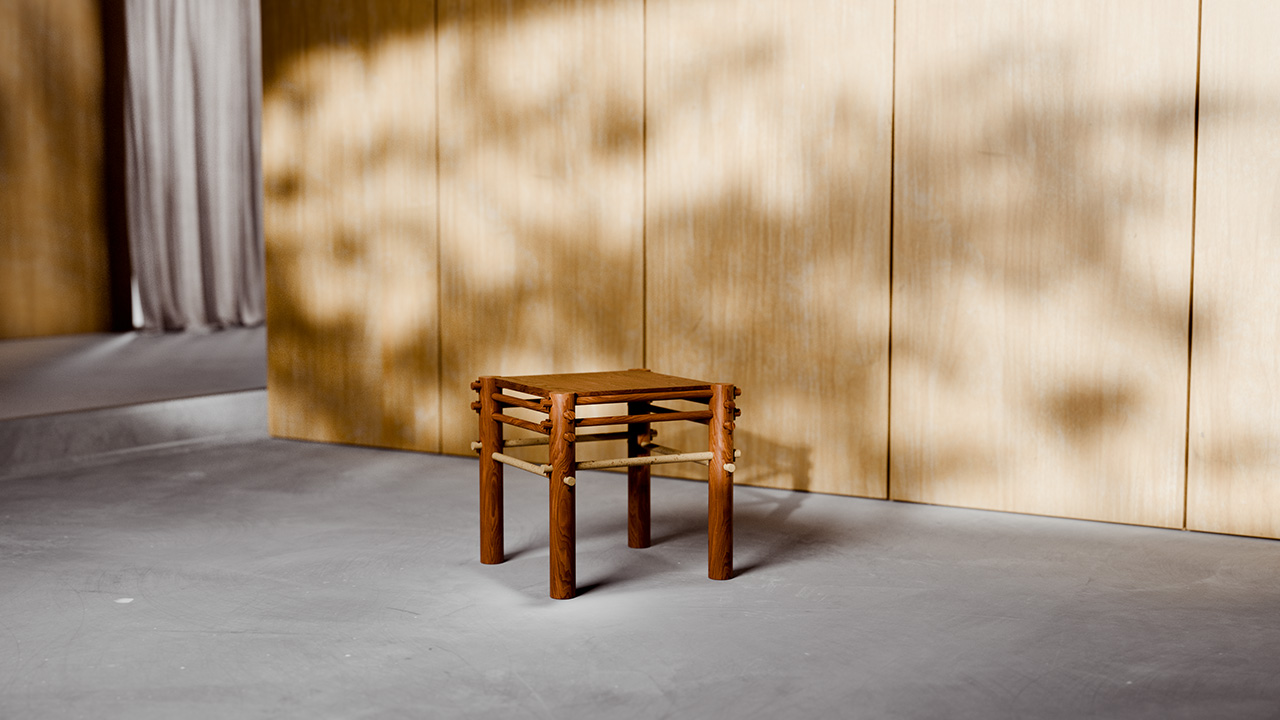
In 2025, she co-founded the collective presque pas designers, dedicated to the creation of exhibitions and the promotion of emerging practices. A finalist in the CINNA 2025 competition with the stool from the WSI collection, she continues her research at the crossroads of object, materials, and making gestures.
https://www.instagram.com/emma_faurygraziani/