Région Sud Art Prize : Louise Belin
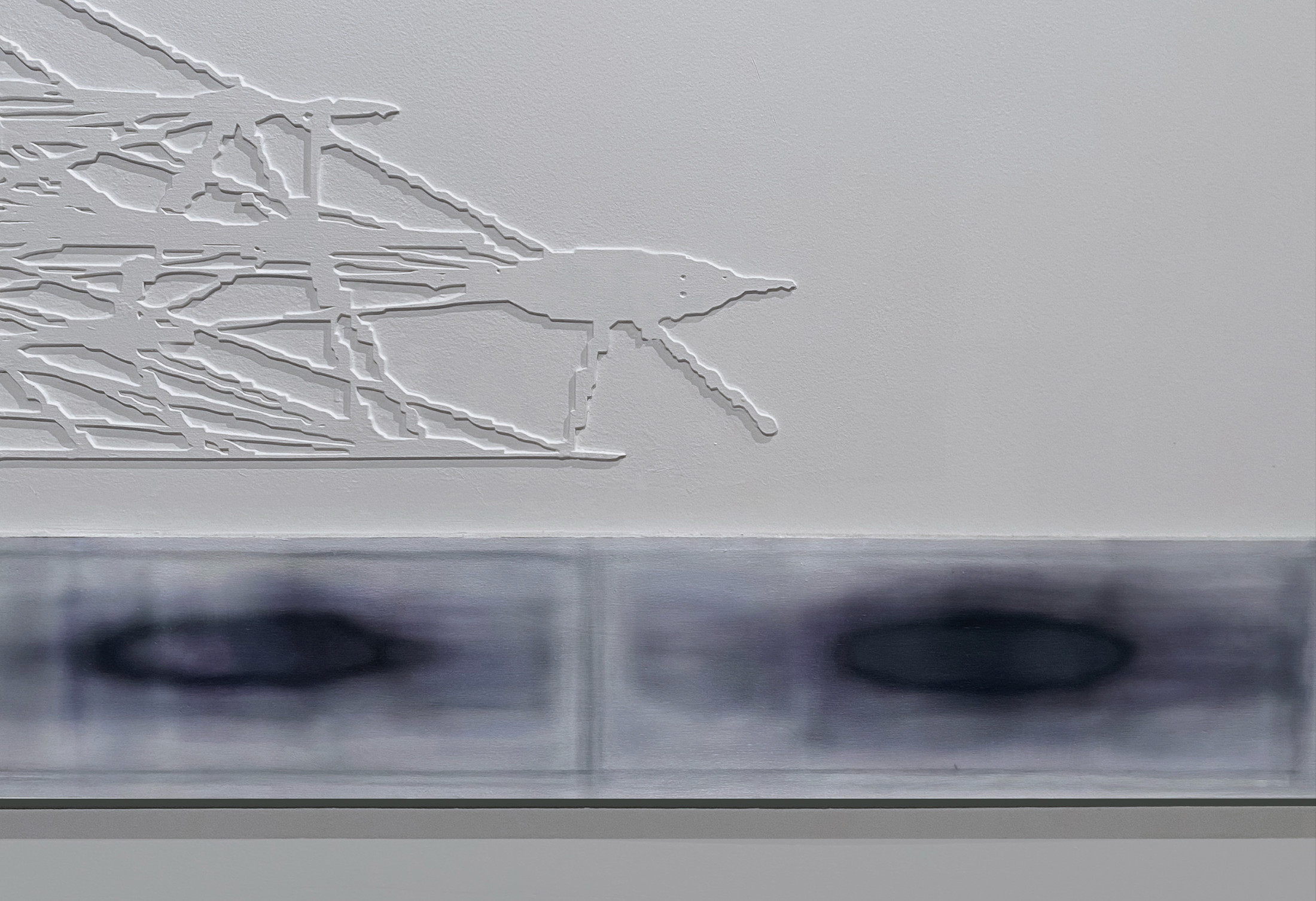
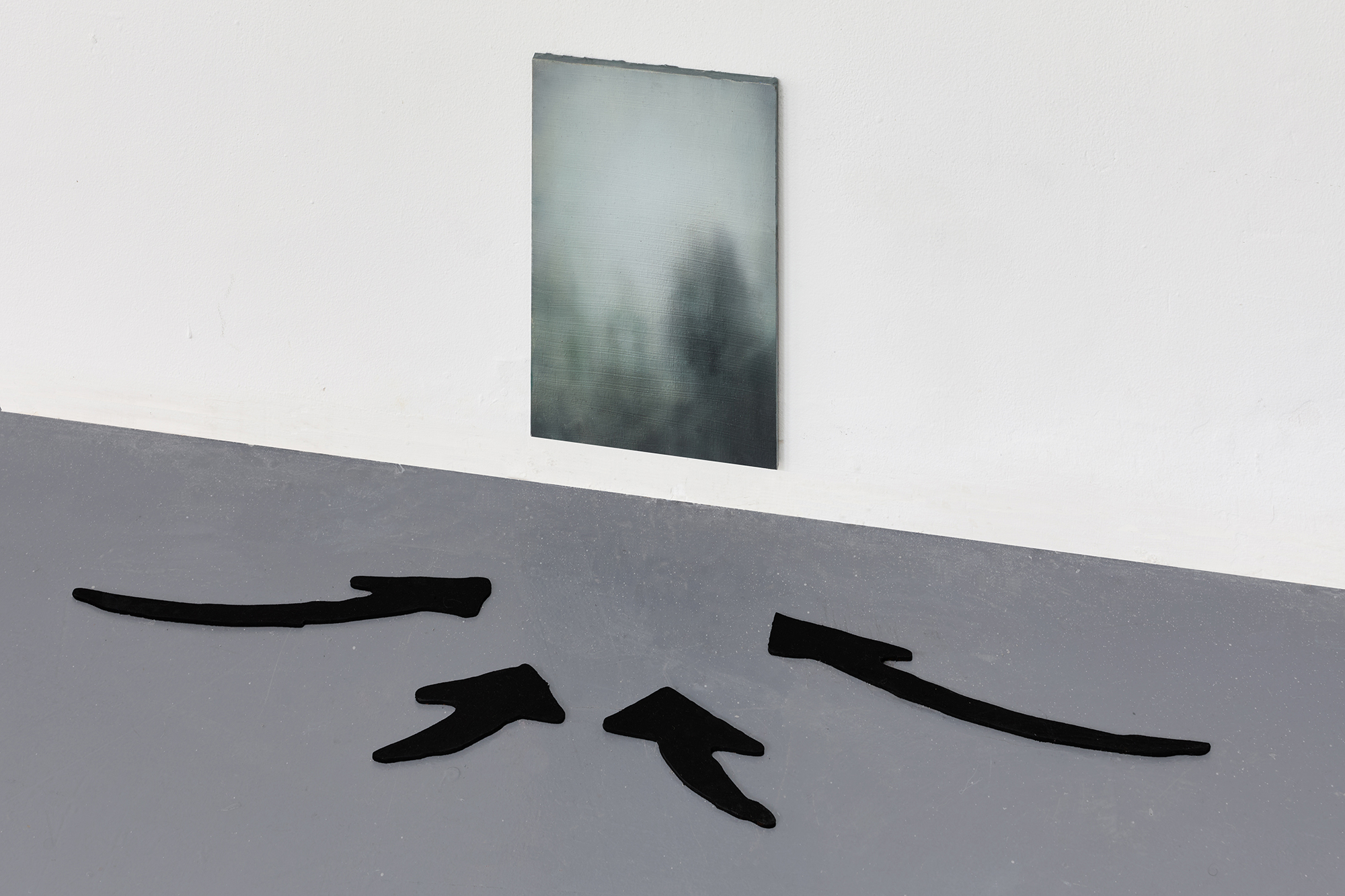
It drools, the image, on the sofa. It overflows, compresses, blurs, wears itself out from having circulated too much. In Louise Belin’s work, nothing stays sharp for very long. For several years now, the artist has been working from videos of sleepers filmed on livestream: bodies on standby, captured in this suspended temporality. From this seemingly innocuous idea, her elongated wood paintings emerge from this murky threshold where the screenshot becomes an altered trace, a residue of flow — something we recognize without quite being able to fully identify. It’s this in-between state that interests her: the moment when an obscure silhouette begins to come undone, when it stops being pure information and becomes matter and noise.
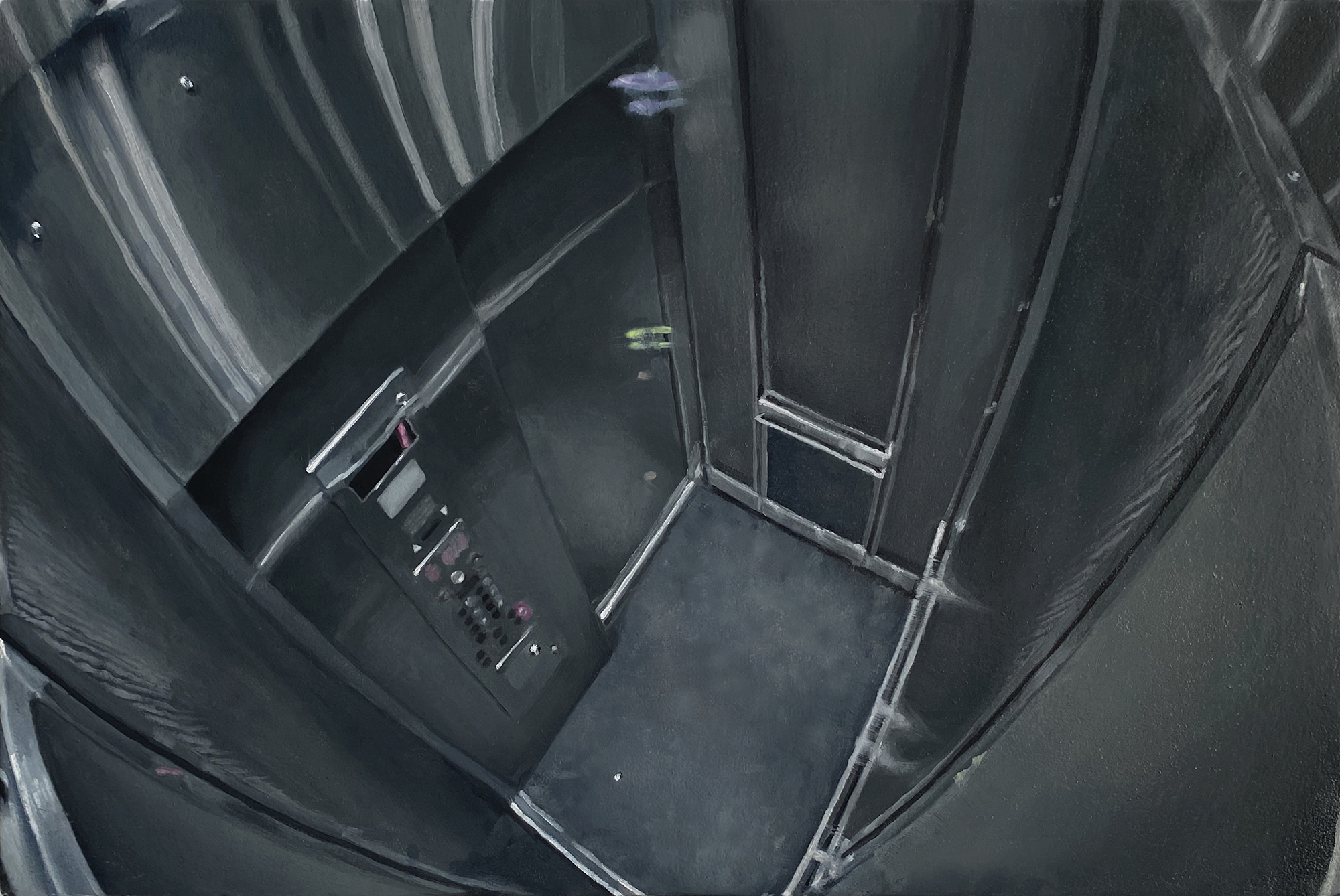
Louise often starts from vernacular images sourced online: surveillance cameras, weather webcams, self-tracking apps, or maintenance interfaces — representations produced with no aesthetic intent, designed instead to monitor, measure, optimize, or correct. Working against their original purpose, she compiles them and lets them drag on. Not to redeem them, nor to mock them, but to test them. Reworking them in paint, as one might replay the same sequences of a series, requires subjecting them to another logic — that of repetition and wear. A way of inserting herself into uncontrollable visual regimes that already outpace us.
Her painting speaks of this great contemporary fatigue. A diffuse fatigue, almost without object, produced by the constant standby of our devices and the permanent demand for availability they impose. Jonathan Crary made this point well in his book 24/7: sleep itself is treated as an anomaly within late capitalism, one of the last unproductive thresholds still to be absorbed. Louise keeps returning to this territory. Sleeping, waiting, slowing down, reproducing. Her protocols around rest or surveillance shift the question: how do you represent what precisely escapes a clear reading? How do you paint waiting, or the haze that accompanies our relationship to screens?
Her paintings, reliefs, night-lights, or books function like hypotheses that persist even as they degrade. The friezes she composes sometimes resemble sequences, but without a narrative — only variations, with near-imperceptible differences: they unsettle scale, dazzle their sources, make what we’re looking at uncertain. The books extend this research by engraving already-obsolete digital fragments, where the disruptions of sleep come to cross out the promises of technical continuity. For her, technology is never rejected: it fascinates, it draws her in. But that fascination runs through an ordeal — it has to be pushed all the way to its blind spots.
Faced with a digital imaginary built on clarity, speed, and performance, Louise instead chooses blur. Background noise. Poor images. The ones the algorithm makes us see without our ever really observing them. Her work settles into a low zone of attention, where the scrutinized bodies are as exhausted as they exhaust us. Her paintings produce their own forms within a standardized flow, a world that allows no pause — not out of binary resistance, but in order to linger there long enough to finally perceive its texture. Before going to sleep.
Pierre-Antoine Lalande
Bio
Louise Belin (born 1998 in Mantes-la-Jolie) lives and works in Paris. A graduate of ESADHaR Rouen and the Beaux-Arts de Marseille, her work has been presented notably at the Musée des Arts et Métiers (Paris), the Musée d’Art contemporain des Sables d’Olonne, the Grande Halle de la Villette (Paris), and the galerie Eric Mouchet (Brussels).
She develops a practice of painting and installation drawing from poor images — sourced from surveillance cameras, livestreams, meteorological webcams, and self-tracking tools operating within 24/7 monitoring logics. She takes these images up, slows them down, and passes them through the extended time of the painterly gesture.
This slowing-down reveals zones of opacity, blur, and obsolescence within tools that nonetheless promise control, clarity, and optimisation. Her paintings and reliefs thus compose a form of background noise from which she seeks to translate plastically the fatigue of images, devices, and the gaze that moves through them.