Associated project – l’atelier des artistes en exil, Marseille/Paris
Abderrahmane Cheref, Tamara Abou Alwan (Galactic Unicorn), Tahereh Fallahzadeh
Due to war, racial, ethnic, sexual and gender discrimination, or religious, economic and political marginalization, every day many people are forced to leave their homeland. Amongst them, some are artists often involved in a continuous fight against the authorities of their countries. Since it is the duty of art to be the voice of the oppressed and to reveal the underlying issues in the society, the creative sector in Europe must be particularly mindful of the matter and provide the infrastructures to better accommodate these artists. Artists must be able to continue to practice their art, not only as individuals, but also as custodians of their culture. It is through art that the culture of a people whose autonomy is threatened, will continue to live on.
The mission of the agency of artists in exile (aa-e) is to identify artists in exile of all origins and disciplines, to support them according to their situation and needs, to offer them work space and to put them in contact with professionals (French and European networks), in order to provide them with the necessary means to restructure and continue their practice. According to the demands of project and programs, the aa-e creates its own events, including the “Party in exile” and the multidisciplinary festival, Visions of Exile, in cooperation with its partners.
///
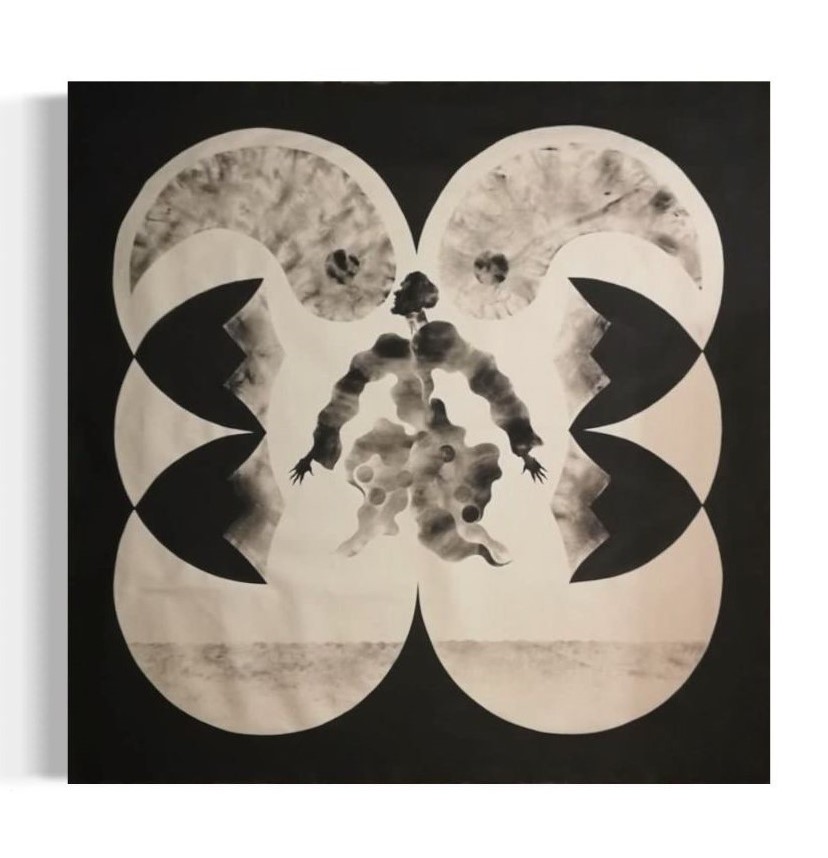
Abderrahmane Cheref draws on the imaginary of the sea as a space of metamorphosis. In Between Two Banks, the sea becomes a threshold between two places, two cultures, or two worlds. It is the site of both a physical and an inner crossing, where life and identity are reshaped and reconfigured.
His painting practice extends into an installation centred on the skate egg case, a keratin capsule that protects the embryo before becoming an empty shell. This organic form, which retains the trace of a former presence, questions what is in the process of becoming. His work develops a visual language informed by the relationship between nature and fiction, inspired by living organisms and their transformations.
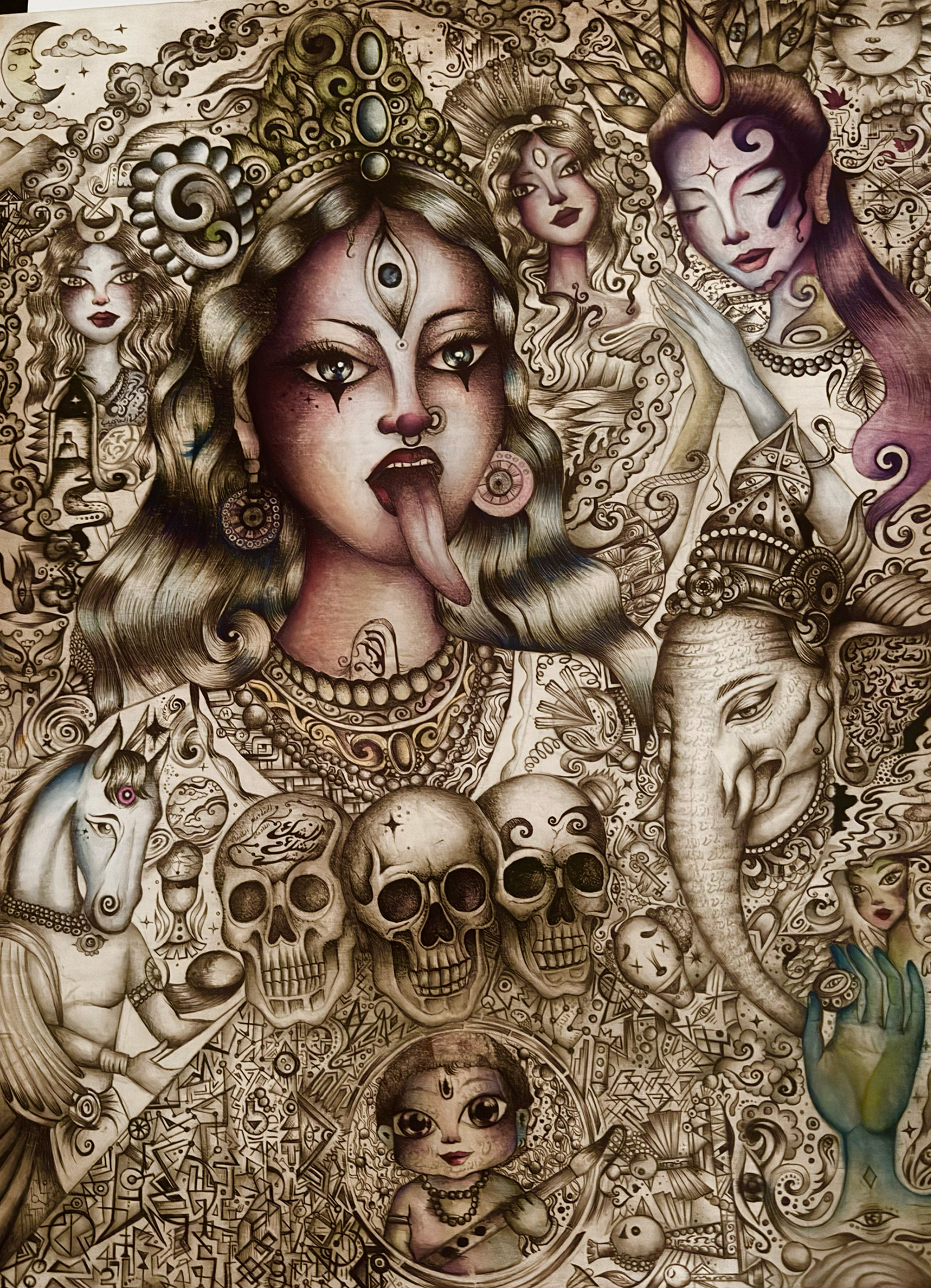
Tamara Abou Alwan develops a multidisciplinary practice informed by Carl Jung’s psychology, spiritual philosophies, and mysticism. Through video, performance, and drawings on fragments of cardboard, she explores the collective memory of persecuted ethnic and religious minorities.
Conceived as an ever-evolving archive, Cardboard Dreams is rooted in the contemporary realities of the Middle East and asserts a form of peaceful resistance through art. Her universe unfolds at the intersection of mythology and esotericism, where artistic creation becomes a means of transforming experiences of violence and resisting erasure.
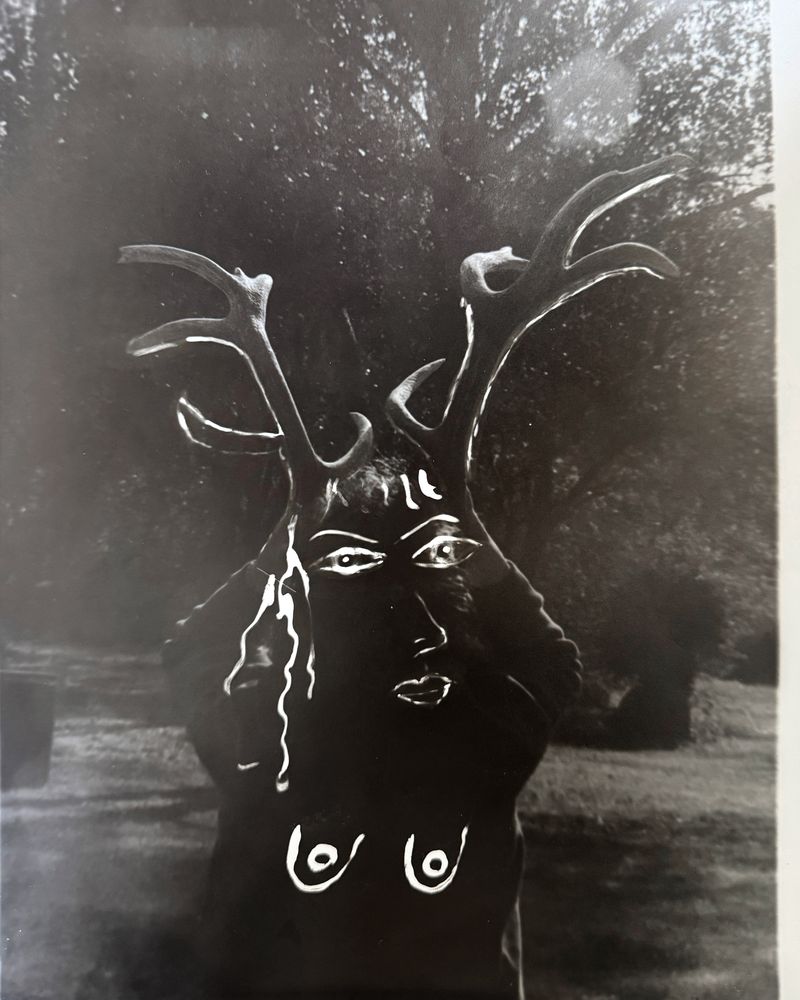
Tahereh Fallahzadeh works with analogue photography. It is during her walks that she gathers the raw material for her works. In the series Light on My Skin, she draws inspiration from the surroundings of her home in Soisy-sur-École.
Taking the photographs constitutes a first performance. The second takes place in the darkroom, where Tahereh Fallahzadeh develops her negatives and produces experimental prints using a variety of objects—many collected at the site where the photographs were taken—and a range of techniques, including double exposure, photograms, and drawing with photographic chemicals.
The artist’s interventions on the photographs are guided by what the environment evokes for her. She expresses these impressions through her own artistic vocabulary, imbued with a symbolism linked to the sense of freedom she rediscovered after leaving Iran. Each print is a unique work.