Région Sud Design Prize : Manon Garcia del Barrio
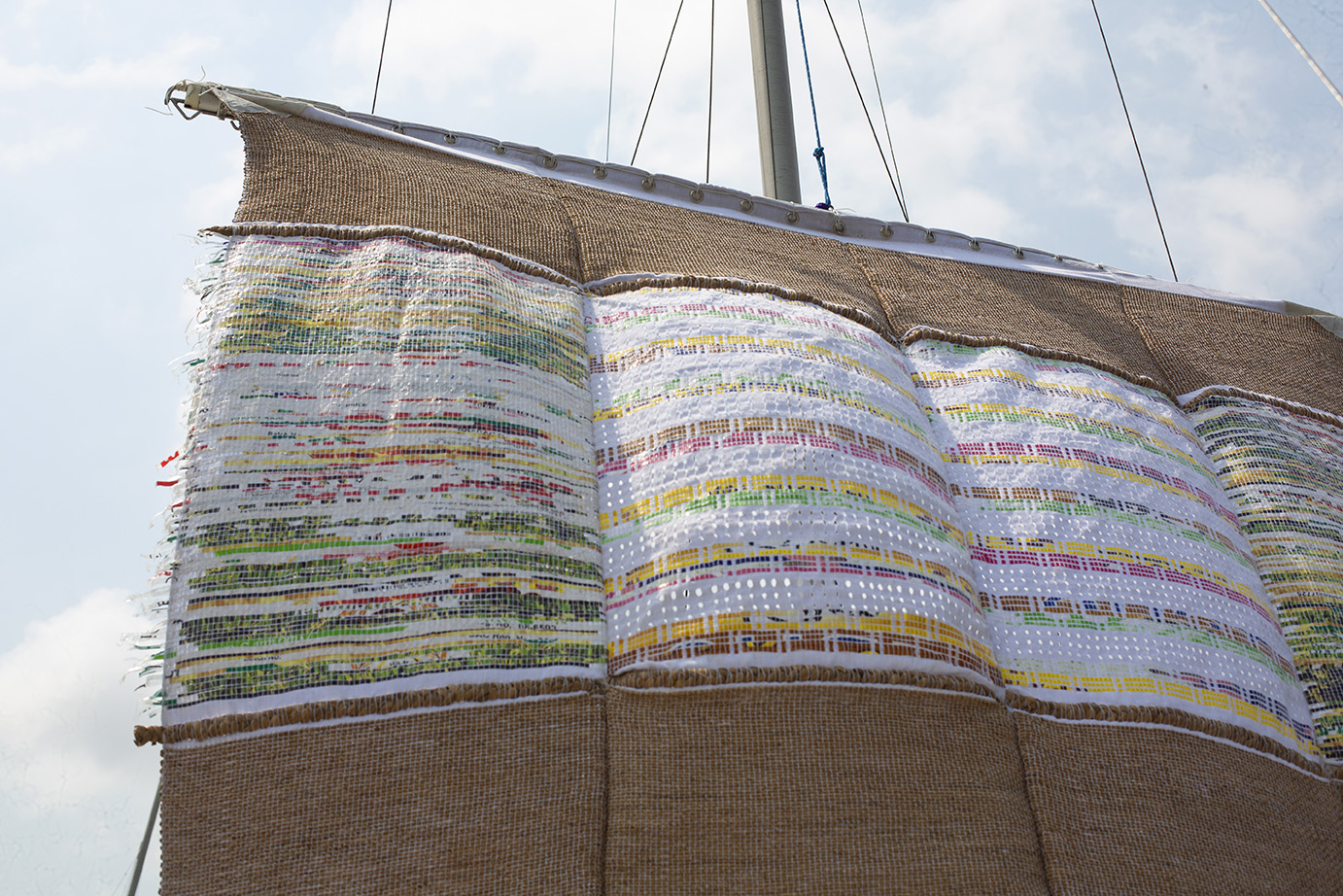
The boat sail that dominates Manon Garcia del Barrio’s installation for Art-o-rama makes for an ideal entry point into the practice of this versatile designer. Produced during a residency in Lagos, Nigeria, Passages Tissés (2022) is made of water hyacinth — an “invasive” plant native to Brazil that has become omnipresent in the African lagoon due to global warming — of rice sacks used by local fishermen to make their sails, and of polyester, all worked using traditional Nigerian weaving techniques learned from local artisans.
A graduate in textile design from the Haute École des Arts du Rhin in Mulhouse, and later in fashion and textile professions from Aix-Marseille University, Manon Garcia del Barrio weaves together a complex practice, one that gives pride of place to textile research while developing genuine diversity in the formats and materials she uses. Though the designer draws on artisanal and manufacturing traditions, she never lapses into either nostalgia or conservatism. This dialectic between tradition and innovation runs through Passages Tissés, which combines vernacular weaving techniques with an iconoclastic material research, as well as through much of her other work. If Manon Garcia del Barrio grounds herself in history, drawing on the long time and slow gestures of domestic, pre-industrial weaving, it is all the better to work toward the future. From Provençal boutis — a technique of stitching and embroidery used in particular in quiltmaking — to the waterproofing techniques used to build the boats of Bronze Age fishermen in Marseille (the Gyptis project run by Aix-Marseille University and the CNRS, which inspired her piece Rencontres Lacydoniennes, shown at the Musée d’Histoire de Marseille), the designer, firmly rooted in her territory, draws on a textile “terroir” with openness, curiosity, and creativity. As with the city of Marseille itself, maritime culture runs throughout the work of this designer and weaver, one of whose pastimes is sailing small traditional Marseille boats.
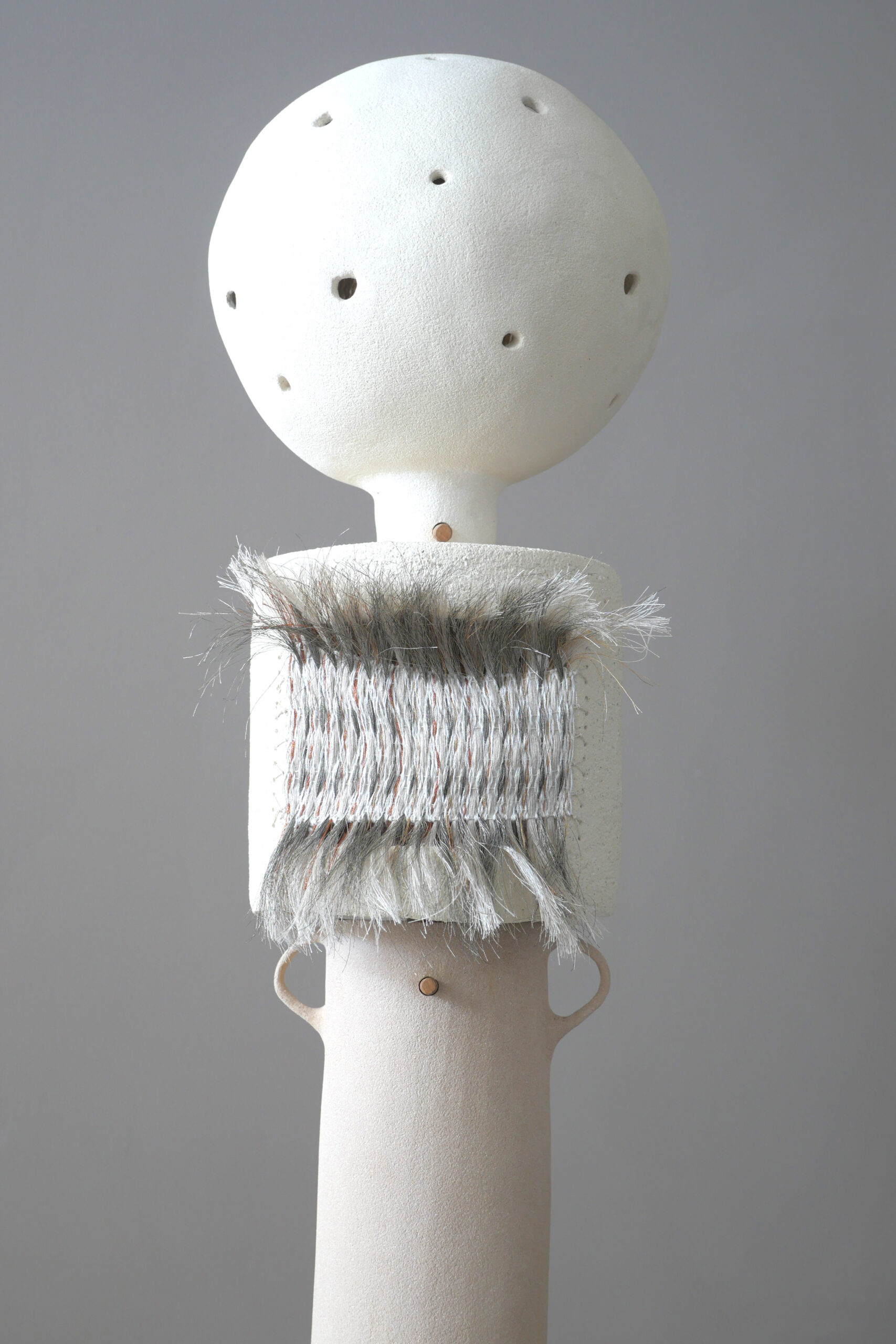
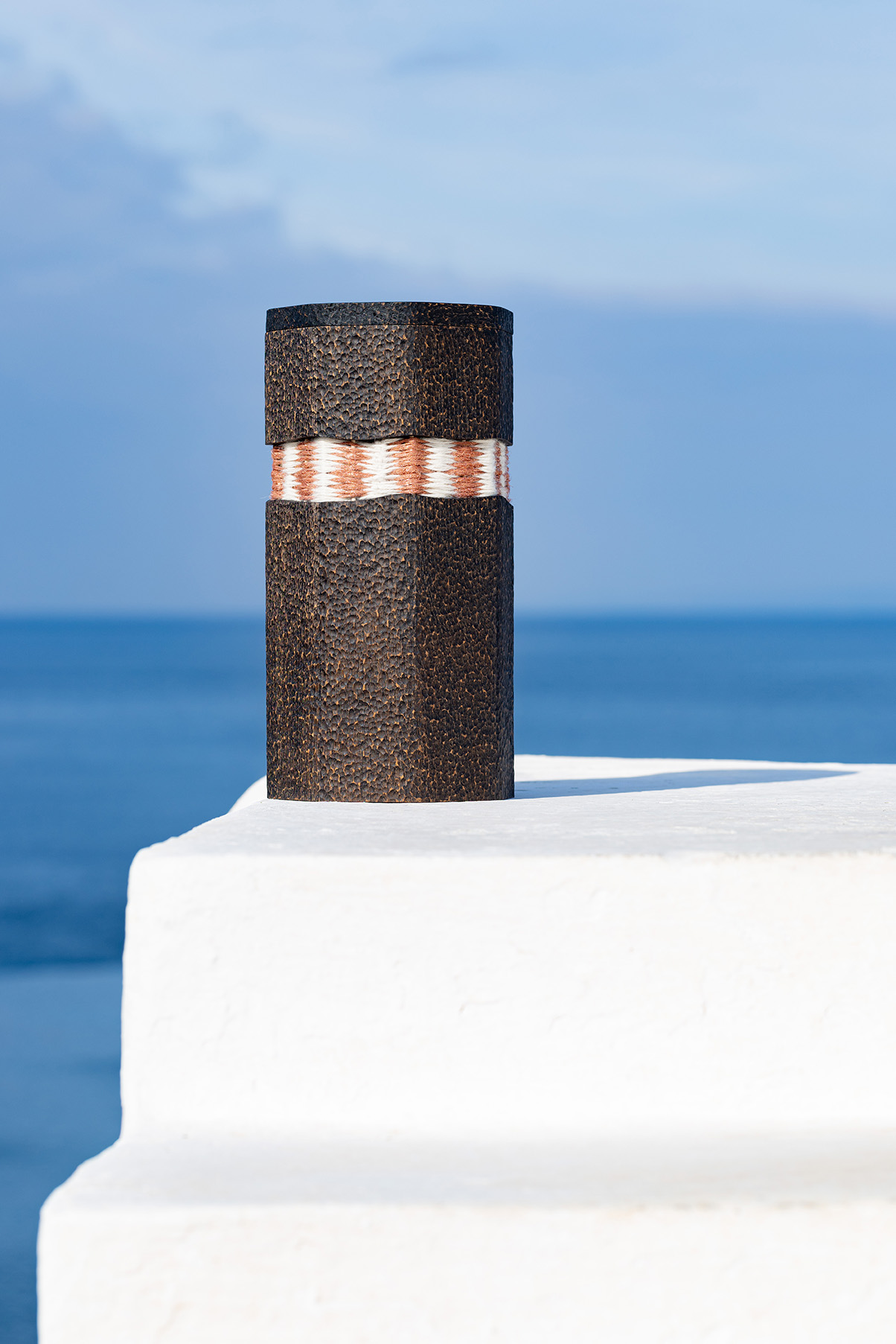
She works with maritime techniques of sailmaking, weaving, and knotting, with naval architecture, but also with the sea’s own produce and “inhabitants” — from small gilded rocaille beads to mother-of-pearl shells, which she incorporates into her textiles. Manon Garcia del Barrio has built up numerous collaborations with ceramic artists such as La Fille de Tipaza, or with cabinetmaker Arthur Milles, whom she met through Les Partisan·e·s, a collaborative creative process led by Caroline Pelletti Victor — who is also behind the Vaisseaux project and the funerary urn Diurne (2025, created in collaboration with cabinetmaker Jérémy Aymard). Her commitment to passing on knowledge, alongside her drive for innovation, comes through not only in her creations but also in the classes and workshops she runs throughout the year for all ages and audiences — further proof of her openness to others and her passion for sharing her rich design practice.
by Justinien Tribillon
Manon Garcia del Barrio lives and works in Marseille, France.
Her work is nourished by textile anthropology, and she is committed to shedding light on the history of craft techniques and their diversity. She creates poetic objects, rooted in a place, using local or recycled materials. In her approach, the making process and the encounters it provokes are as important as the work itself.
Manon explores the reactions of matter: seeking, designing, and weaving unique objects with surprising qualities. She combines cotton and copper, linen and wood to create moving textile objects: testimonies of a place, a culture, a means of bringing people together around a gesture. It is an initiatory journey through matter.
She is drawn to navigation as a subject of study, using it to question our relationship to time, freedom, and the use of resources.
A graduate of the Haute École des Arts du Rhin (HEAR) and the Université d’Aix-Marseille, Manon has worked with LUMA Arles and the Musée d’Histoire de Marseille, and completed a residency with the French Embassy in Nigeria.
https://www.instagram.com/manon.garciadelbarrio/