Région Sud Design Prize : Andrea Moreno
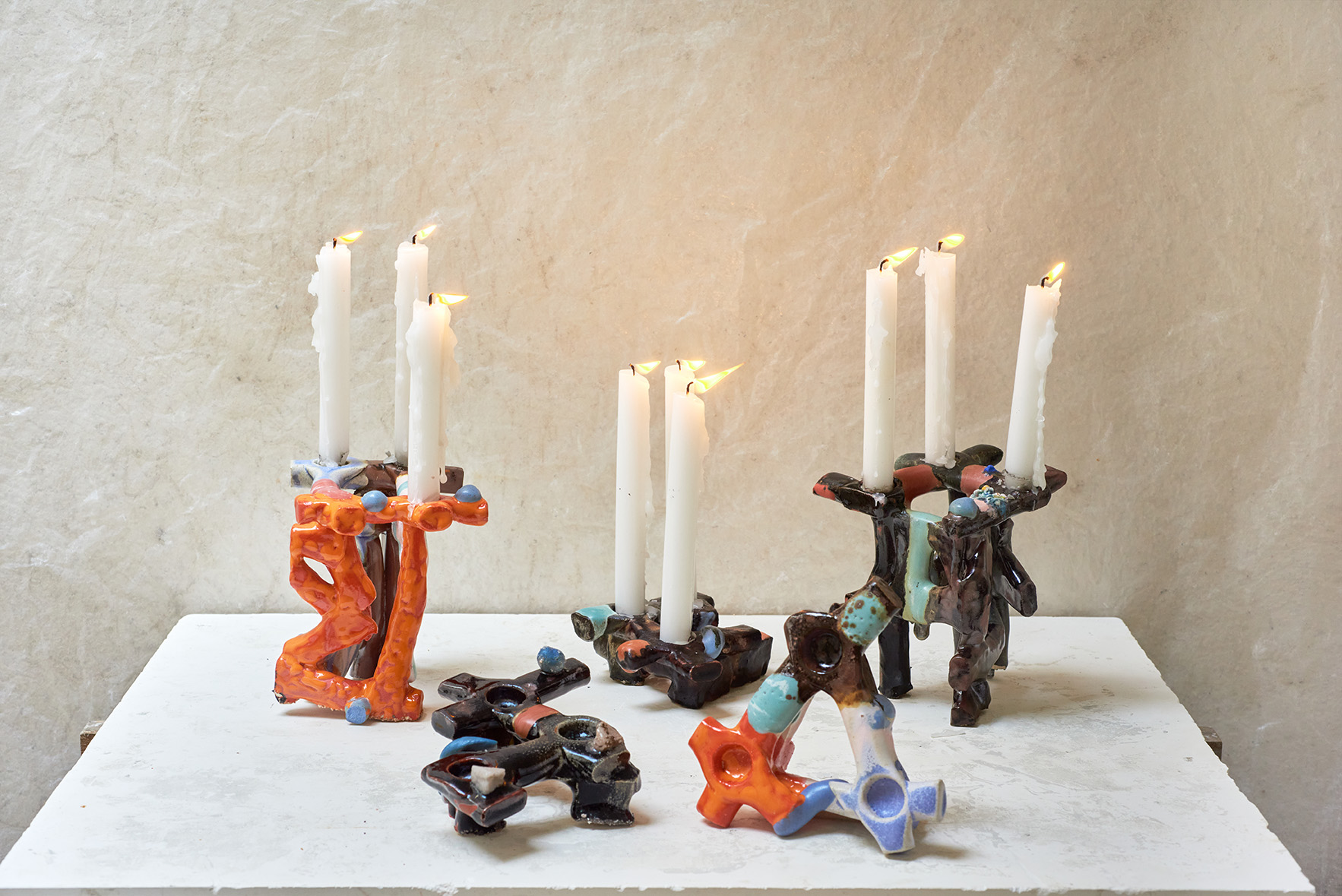
The first thing ceramicist Andrea Moreno does when she arrives at her Marseille studio is dig through the trash. There she finds her own castoffs: broken pieces, imperfect sculptures, failed firings, scraps of clay, leftover glazes tossed aside without a second thought, waiting for the day inspiration strikes in a different frame of mind. The idea of failure or mistakes doesn’t seem to belong to the Venezuelan artist and designer’s vocabulary. Of course, she designs her objects, imagines them, anticipates them, and works the clay and glazes with all the technical skill she has built up over years of practice — as well as through her training at the Maison de la Céramique in Dieulefit (Auvergne-Rhône-Alpes region).
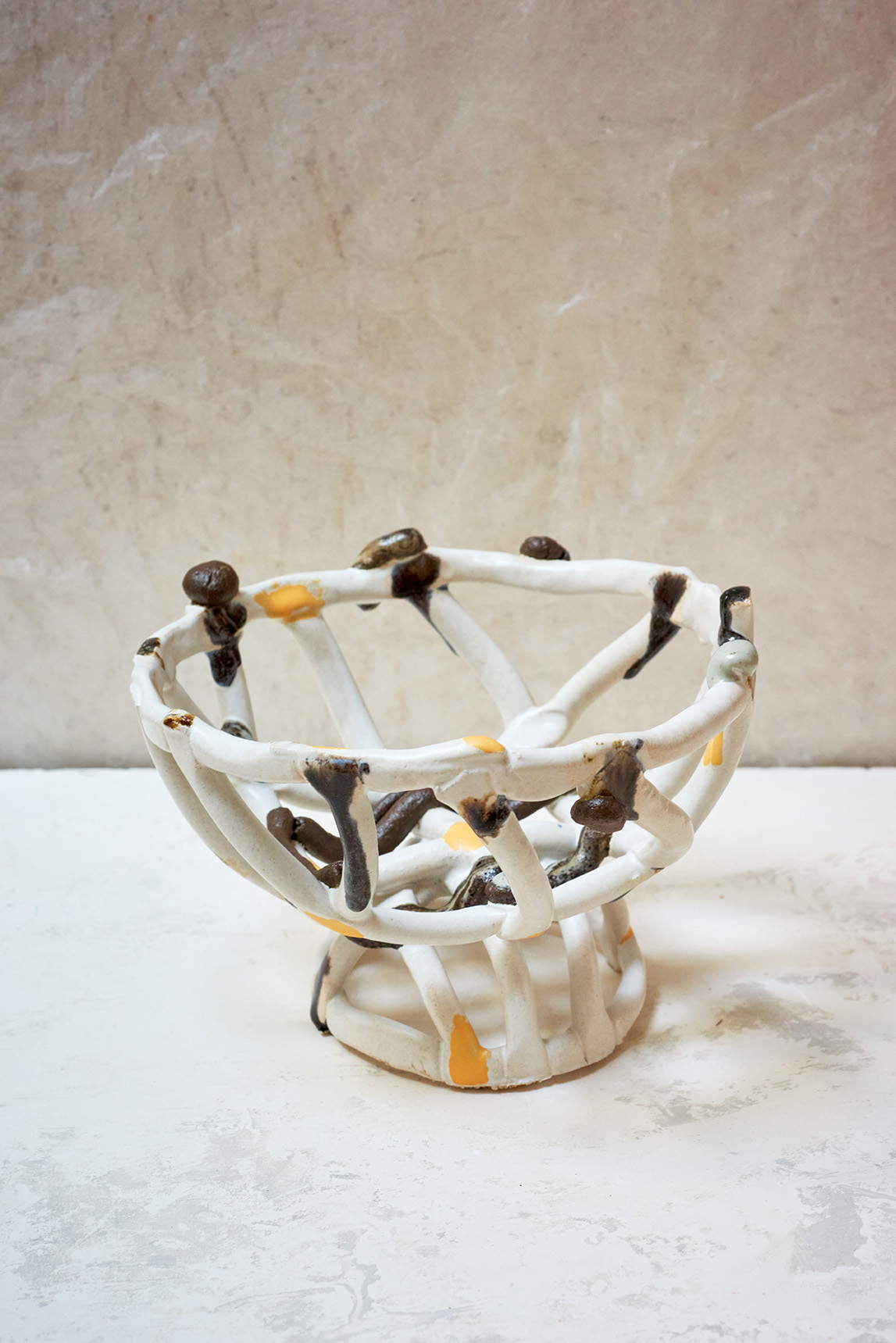
But what ends up in the trash one day will end up on the table the next, because “error,” for her, is only a temporary state, waiting to be put back to use. Her practice draws on what she calls “Venezuelan ingenuity,” or the “resourceful glamour” of her native country — a capacity to build and repair with what already exists, with intelligence and resilience. Trained in illustration at Kingston University in London (UK), the Caracas-born artist gradually redirected her practice toward design, sculpture, and, specifically, ceramics. She moved to Marseille, where her sculptures quickly drew attention for their contrasts of color and texture, the collage techniques she employs, and a body of work that blends the utilitarian with the symbolic.
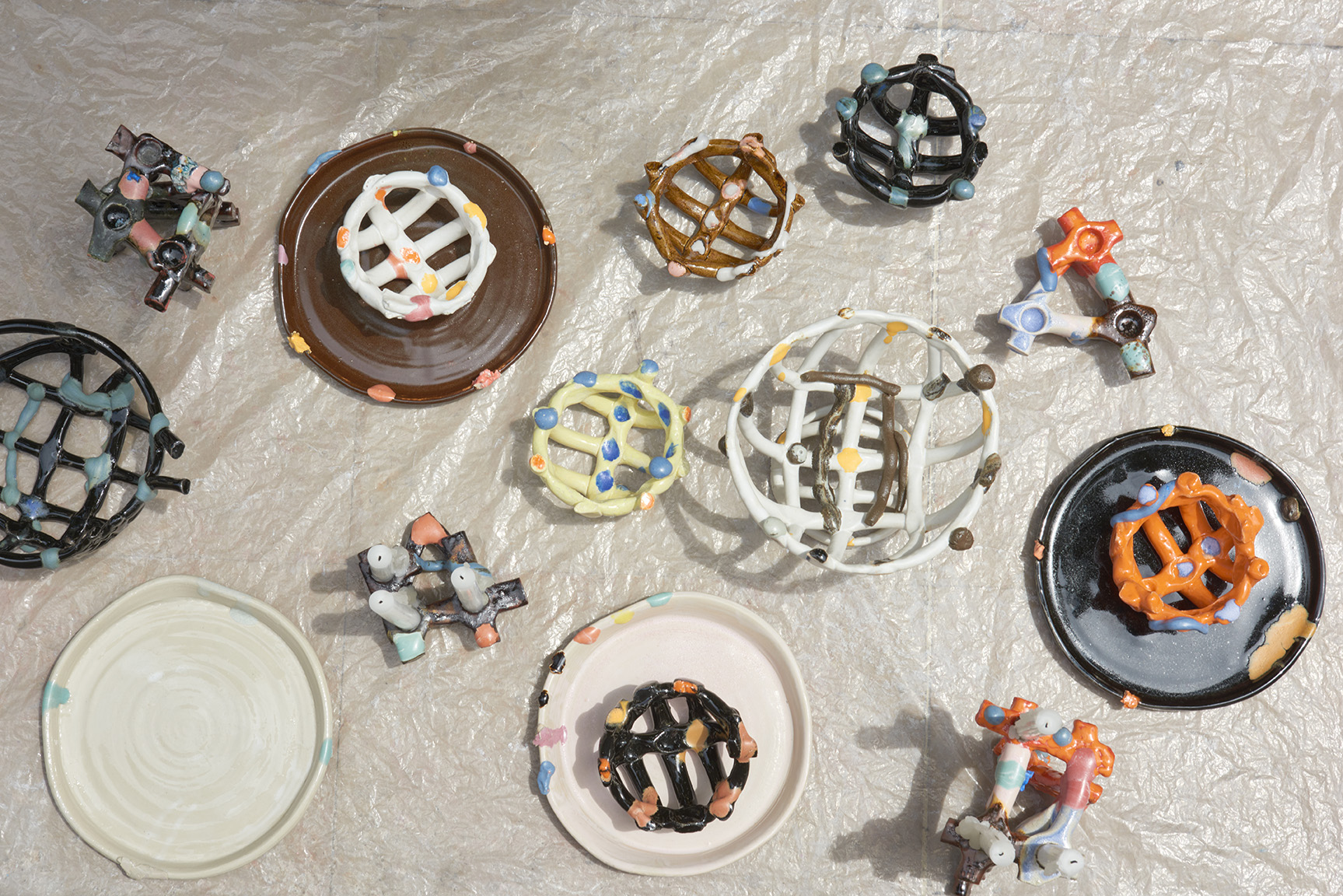
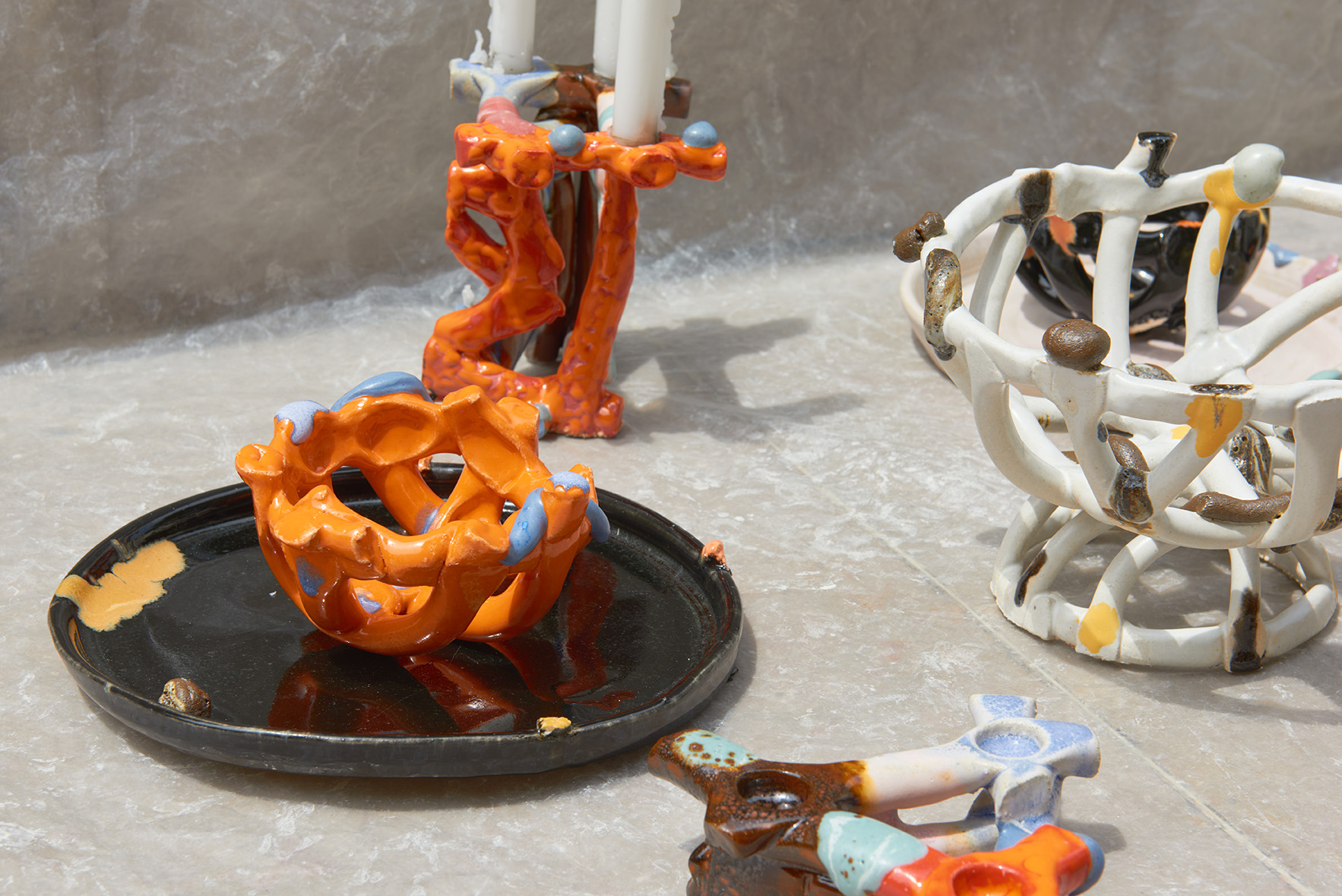
Assemblage and “zero waste” sit at the heart of her approach: fragments of “past objects” are reborn as new forms, united through recasting and crushing, among other techniques. The starting point for her objects, sculptures, and installations is always a specific memory, whose elements she magnifies until they become “carriers of memory.” The installation she is presenting at Art-o-rama, for instance, is inspired by the Venezuelan estar — a living room not used in everyday life, where the household’s most extravagant objects wait, protected under plastic covers and tarps, for only the most important visits. Her approach aims to be popular and accessible, and the pieces she produces range from candlesticks to sculptural installations, such as Tita (2024) — a hammock made up of around a hundred pieces, exhibited by the 19M at the Mucem — or Carmen Laryssa (2025), a tribute to her aunt, seated in her eternal plastic chair facing the Caribbean Sea, beer in hand.
That same blend of power, humor, and humility runs through Andrea Moreno’s creations — as in the shower shelf fitted with ceramic toothbrushes, which can be read as a still life, where human presence is suggested, where the objects seem inhabited. The works of designer and artist Andrea Moreno are ambivalent, varied, and resist being categorized too quickly. Someone who relishes being surprised by the way matter interacts with the power of a kiln reaching 1250 degrees, she offers us a practice of highly technical, artistically forceful tinkering — one that never loses sight of either her origins or her sense of humor.
by Justinien Tribillon
Born in Caracas, Andrea Moreno grew up observing the city from traffic jams. This Venezuelan childhood and the experience of migration continue to shape the way she looks at the world and makes objects.
Trained in Dieulefit in 2022, her approach to design flows directly from her sculptural practice: a work of assembly, balance, and experimentation in which the object becomes an extension of sculpture in an everyday context. She draws inspiration from Venezuelan ingenuity — the capacity to repair and build with whatever is at hand, which she calls a “resourceful glamour” — translated in her objects into improvised constructions of fragile, almost miraculous equilibrium.
Her process follows a near-zero-waste logic. In ceramics, she treats workshop leftovers — clay scraps, glaze residues, broken pieces — as raw material to be crushed, remelted, and incorporated into new forms. Fragments of past objects thus become the structure of new ones: candleholders, vases, tables, functional volumes, and experimental pieces. Each object bears the traces of these layers, like a material archive of the studio.
Winner of the Silver Prize at the Young European Ceramicist award (Saint-Quentin-la-Poterie, 2023), she has exhibited notably at Nendo Galerie in Marseille, Volume Céramique in Paris, as well as at Art-o-rama, the Salon Céramique 14 in Paris, and the Galerie du 19M in Marseille and Dakar.
https://www.instagram.com/holaandreamoreno/